5 Essential Records Every Genealogist Needs
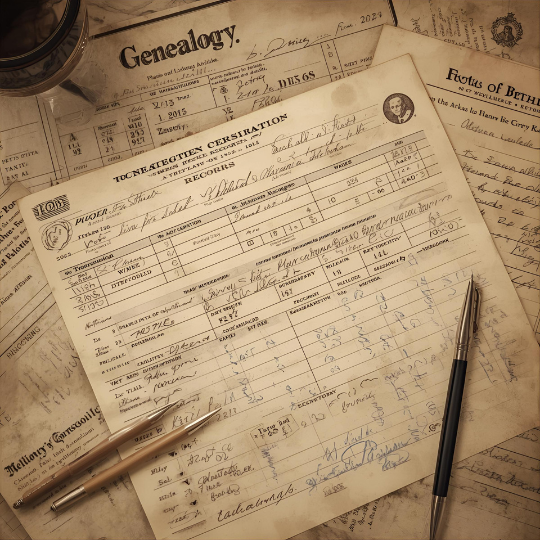
Every genealogist encounters brick walls—ancestors who seem to have vanished from history. Success often comes down to knowing which records hold the key to unlocking your family's past. Here are the five essential record types every researcher needs to master.
1. Vital Records: Birth, Marriage, and Death
Vital records form the backbone of genealogical research. Birth certificates reveal parents' names and birthplaces. Marriage records document unions and often include parents' names and witnesses. Death certificates provide burial locations, causes of death, and valuable family information.
Key tip: Many U.S. states didn't require statewide vital registration until the early 1900s. For earlier periods, check church records, which often served the same purpose. Always request certified copies when possible—they contain more complete information than abstracts.
2. Census Records
The U.S. federal census, conducted every 10 years since 1790, provides snapshots of families at specific moments in time. These records reveal household composition, ages, birthplaces, occupations, and relationships—tracking families across decades and showing migration patterns.
Key tip: Always search multiple census years for each ancestor. Ages and birthplaces can vary between censuses, so use the information as clues rather than absolute facts. Pay attention to neighbors—they're often relatives. Watch for name variations and phonetic spellings.
3. Immigration and Naturalization Records
For immigrant ancestors, these records provide crucial links to ancestral homelands. Passenger lists show ship names, ports of departure, arrival dates, ages, and occupations. Naturalization records include declarations of intention, petitions, and certificates—often revealing exact birthplaces and arrival dates.
Key tip: Immigration records are most detailed from 1820 forward, with increasingly complete information after Ellis Island opened in 1892. Remember that not all immigrants naturalized. Check both federal records and local court records, as naturalization could occur in various courts.
4. Land and Property Records
Land records often survive when other documents have been lost, making them invaluable for earlier research periods. Deeds document property transfers. Land grants show original government transfers. Mortgages reveal financial relationships. Tax records establish property ownership over time.
Key tip: Land records can reveal unstated family relationships. Watch for property transfers between family members, witnesses who are often relatives, and adjacent landowners who may be kin. Check both grantor (seller) and grantee (buyer) indexes.
5. Probate and Court Records
Probate records—wills, estate inventories, and settlement documents—often name multiple generations and can break through brick walls when other records fail. Wills name spouses, children, and sometimes grandchildren. Estate settlements show distribution among heirs. Guardianship records identify orphaned children and their guardians.
Key tip: Don't assume only wealthy ancestors left estates—even modest property might generate probate records. Married women often couldn't own property independently, so look for them in their fathers' or husbands' estates. Guardianship records are particularly valuable when other records are scarce.
Building Your Research Strategy
The most effective genealogical research uses all five record types together, cross-referencing information to build a complete picture. Each type has unique strengths: vital records provide accurate dates, census records show families in context, immigration records connect to homelands, land records prove residence, and probate records name multiple relatives.
Remember that successful research isn't about finding one perfect record—it's about building a case through multiple pieces of evidence. Start with these essential records, and let the clues they provide guide you to additional sources.
Need Help Accessing These Records?
Our professional genealogists know exactly where to find these essential records and how to extract every piece of valuable information from them. Let us help you break through your brick walls and discover your family story.
Schedule Free Consultation